Leaderboard



Popular Content
Showing content with the highest reputation since 10/06/2024 in Posts
-
A customer asked me to create a powerpoint explaining the advantages of LabVIEW. While putting together the practical rationales, just for grins I asked Chatgpt to create a presentation explaining the philosophy of LabVIEW in a Zen sort of way. Here is what it came up with. Zen_of_LabVIEW.pdf6 points
-
A is for Argumentative, right?5 points
-
I spent a long time online with YouTube support and finally got to the bottom of it. The Channel is back, and all the links work!4 points
-
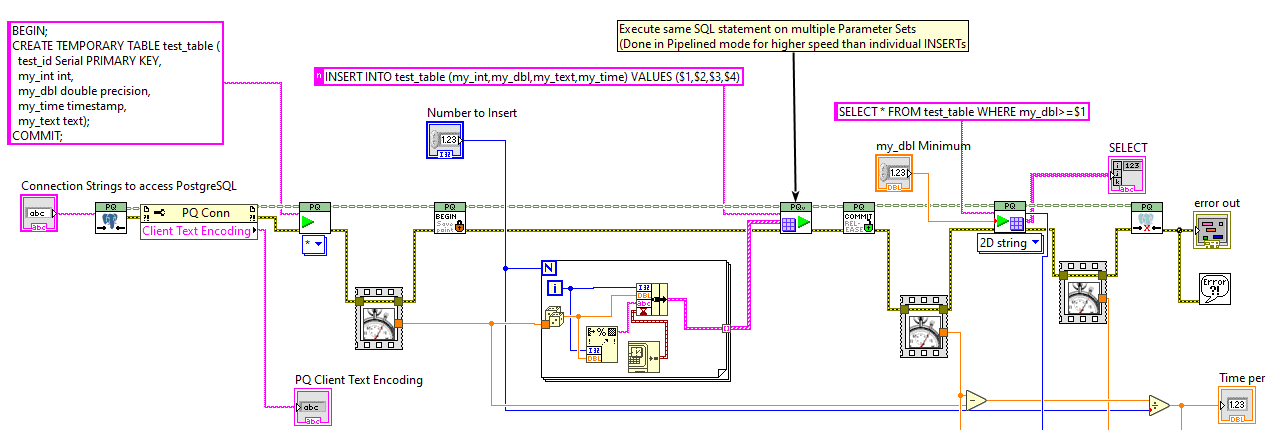
0.6.0 version now on VIPM: https://www.vipm.io/package/jdp_science_postgresql/ This involves significant improvements, as well as Examples that work with a public postgres server (and thus work without needing Postgres installed). I am hoping this is close to a 1.0 version.
 4 points
 -
Phew that is a pretty strong opinion! Although I personally am not a fan of the overall style of DQMH none of my problems are with the scripting/wizards or placeholder text. I think any framework that tries to do "a lot" will be complicated... your own personal framework (which you likely find trivial to use) is likely to be a bit weird to others. DQMH is extremely popular for a reason... To paraphrase the words of a wiser person than I, "please don't yuck someone elses yum"3 points
-
Many years ago I made a demo for myself on how to drag and drop clones of a graph. I wanted to show a transparent picture of the new graph window as soon as the drag started, to give the user immediate feedback of what the drag does and the window to be placed exactly where it is wanted. I think I found inspiration for that on ni.com or here back then, but now I cannot find my old demo, nor the examples that inspired me back then. Now I have an application where I want to spawn trends of a tag if you drag the tag out of listbox and I had to remake the code...(see video below). At first I tried to use mouse events to position the window, but I was unable to get a smooth movement that way. I searched the web for similar solutions and found one that used the Input device API to read mouse positions to move a window without a title and that seemed to be much smoother. The first demo I made for myself is attached here (run the demo and drag from the list...). It lacks a way to cancel the drag though; Once you start the drag you have a clone no matter what. dragtrends.mp4 Has anyone else made a similar feature? Perhaps where cancelling is handled too, and/or with a more generic design / framework? Drag window out of listbox - Saved in LV2018.zip3 points
-
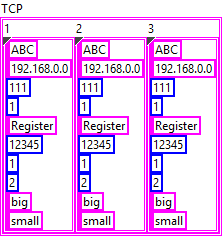
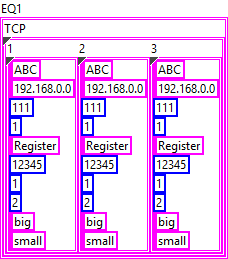
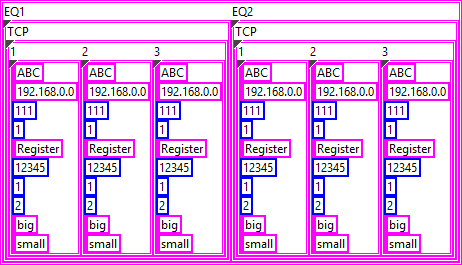
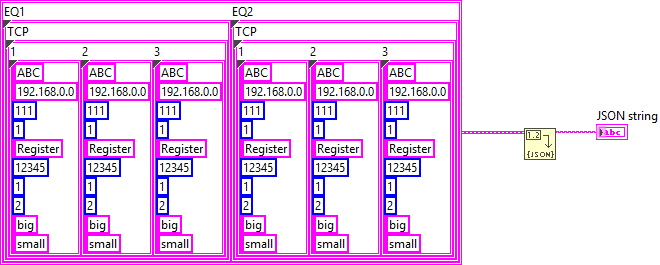
The examples you provide are invalid JSON, which makes it difficult to understand what you are actually trying to do. In your VI, the input data is a 2D array of string but the JSON output is completely different. Your first step should be to define the types you need to produce the expected JSON output. Afterwards you can map your input data to the output data and simply convert it to JSON. The structure of the inner-most object in your JSON appears to be the following: { "Type":"ABC", "IP":"192.168.0.0", "Port":111, "Still":1, "Register":"Register", "Address":12345, "SizeLength":1, "FET":2, "Size":"big", "Conversion":"small" } In LabVIEW, this can be represented by a cluster: When you convert this cluster to JSON, you'll get the output above. Now, the next level of your structure is a bit strange but can be solved in a similar manner. I assume that "1", "2", and "3" are instances of the object above: { "1": {}, "2": {}, "3": {} } So essentially, this is a cluster containing clusters: The approach for the next level is practically the same: { "TCP": {} } And finally, there can be multiple instances of that, which, again, works the same: { "EQ1": {}, "EQ2": {} } This is the final form as far as I can tell. Now you can use either JSONtext or LabVIEW's built-in Flatten To JSON function to convert it to JSON {"EQ1":{"TCP":{"1":{"Type":"ABC","IP":"192.168.0.0","Port":111,"Still":1,"Register":"Register","Address":12345,"SizeLength":1,"FET":2,"Size":"big","Conversion":"small"},"2":{"Type":"ABC","IP":"192.168.0.0","Port":111,"Still":1,"Register":"Register","Address":12345,"SizeLength":1,"FET":2,"Size":"big","Conversion":"small"},"3":{"Type":"ABC","IP":"192.168.0.0","Port":111,"Still":1,"Register":"Register","Address":12345,"SizeLength":1,"FET":2,"Size":"big","Conversion":"small"}}},"EQ2":{"TCP":{"1":{"Type":"ABC","IP":"192.168.0.0","Port":111,"Still":1,"Register":"Register","Address":12345,"SizeLength":1,"FET":2,"Size":"big","Conversion":"small"},"2":{"Type":"ABC","IP":"192.168.0.0","Port":111,"Still":1,"Register":"Register","Address":12345,"SizeLength":1,"FET":2,"Size":"big","Conversion":"small"},"3":{"Type":"ABC","IP":"192.168.0.0","Port":111,"Still":1,"Register":"Register","Address":12345,"SizeLength":1,"FET":2,"Size":"big","Conversion":"small"}}}} The mapping of your input data should be straight forward.
3 points
-
In a previous life, I used to teach a CLD level class using this book, and enjoyed it a lot -- Some of it is certainly outdated at this point, but I think it still has a lot of solid info / strategies in it. I've attached the files as a .zip file to this post. Good luck! Effective LabVIEW Programming Files.zip3 points
-
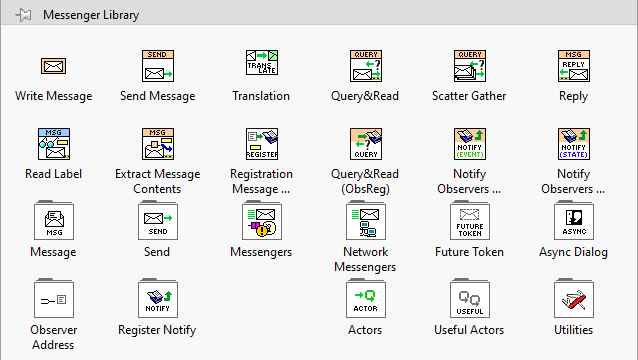
I have put some effort into improving the VI icons in Messenger Library, in hopes of making things clearer. I have particularly been trying to get rid of the magnifying glass icon, which was standing in for too many concepts. I have also tried to improve the Palettes by putting the standard VIs (that one would most commonly use) in the root-level palette: The 2.0 version also introduces Malleable API methods (the orange-coloured ones), which make code cleaner. If anyone could spare some time, it would help me to have feedback. Especially from people who have not used Messenger Library before, so I can get an idea if the key concepts come across. New 2.1.3 version is available here: https://forums.ni.com/t5/JDP-Science-Tools/New-icons-for-Messenger-Library/m-p/4412550#M192
3 points
-
Yes you can. The official form is at https://www.ni.com/en/forms/perpetual-software-licenses-labview.html Some things to keep in mind: There is a current promotion (valid till the end of December 2024) where those who used to have an SSP can renew it today as if the SSP never expired in the first place. That means you can get the latest version of LabVIEW, under a perpetual license, at a discounted price (compared to buying it "new"): https://forums.ni.com/t5/LabVIEW/LabVIEW-subscription-model-for-2022/m-p/4398958#M1296289 Quotes/sales are now handled by external distributors, rather than Emerson/NI. Lots of people have reported that they didn't get a response to their quote requests, or didn't get the expected discount applied. If that's the case, message Ahmed Eisawy, the Director of Test Software Commercialization (who wrote the forum post in my link above) and he'll get it sorted out.3 points
-
The 'Arrange VI Window' Quick Drop keyboard shortcut does this. With the diagram open, Press Ctrl-Space, then once Quick Drop appears, press Ctrl-F. If you want to look at the code that accomplishes this, see here... it should be a good resource for writing your own tool: [LabVIEW 20xx]\resource\dialog\QuickDrop\plugins\_Arrange VIWin SubVIs\Arrange VIWin - Arrange BD.vi3 points
-
You want an ability to override the Equality or Comparison operators? I'm unsure, whether it really existed in OpenG packages, but now you have those neat malleable VIs, that let you do that: Search Unsorted 1D Array , Sort 1D Array , Search Sorted 1D Array. They have an additional input to specify your own equals or less function in a form of a custom comparison class or a VI refnum. There's an article to help: Creating a Custom Sorting Function in LabVIEW2 points
-
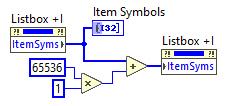
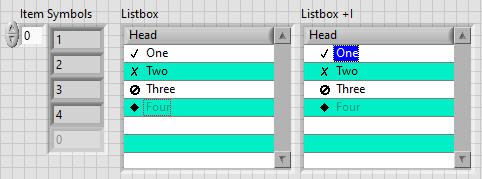
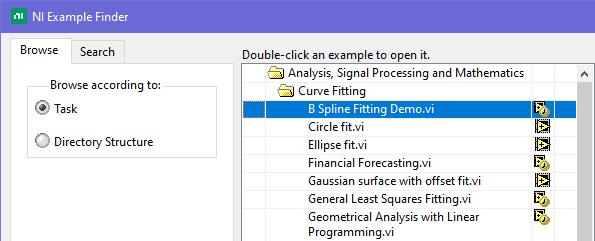
This is exactly what was said in that ancient thread: Tree control in labview. So if you add 65536*N to the Item Symbols property of the Listbox and have the "Enable Indentation" option activated, you shift the symbol/glyph and the text N levels to the right. Could be useful for simple 'parent-child' relationships, if you don't want to use a Tree. And still it's used in Find Examples / NI Example Finder window:
2 points
-
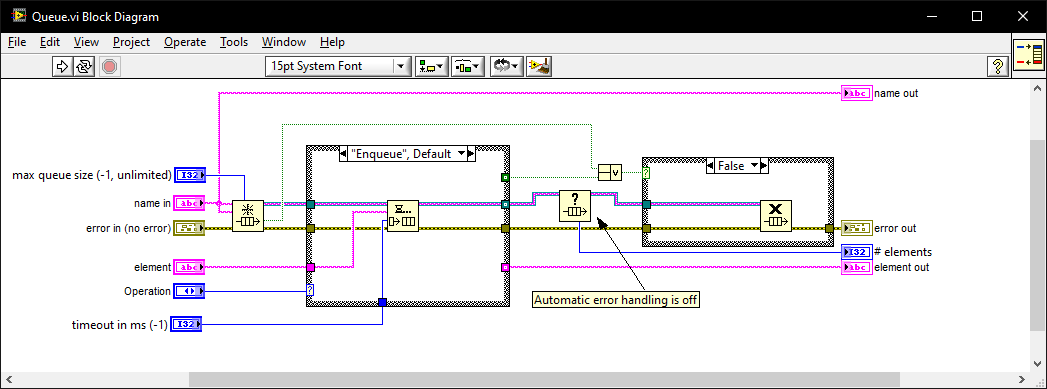
I once went for an interview where they gave me a coding test and asked me to modify it. It was a very long time ago so I don't remember the exact modification they wanted (nothing to do with memory leaks) but I do remember the obtain queue and read queue inside a while loop with the release queue outside. I asked if they wanted me to also fix the memory leak as well as the modifications and they were a little puzzled until I explained what you have just said. I must have seen (and fixed) this while-loop bug-pattern a thousand times since then in various code bases. I also created this VI which I generally use instead of the primitives as it intialises on first call, can be called from anywhere, and prevents most foot-shooting by rolling them all into a single VI and ensuring all references but 1 are closed after use. Queue.vi
2 points
-
Those aren't typo's and errors. They are tests to see if we are paying attention.2 points
-
In the past I have used the IMAQ drivers for getting the image, which on its own does not require any additional runtime license. It is one of those lesser known secrets that acquiring and saving the image is free, but any of the useful tools have a development, and deployment license associated with it. I've also had mild success with leveraging VLC. Here is the library I used in the past, and here is another one I haven't used but looks promising. With these you can have a live stream of a camera as long as VLC can talk to it, and then pretty easily save snapshots. EDIT: The NI software for getting images through IMAQ for free is called "NI Vision Common Resources". This LAVA thread is where I first learned about it.2 points
-
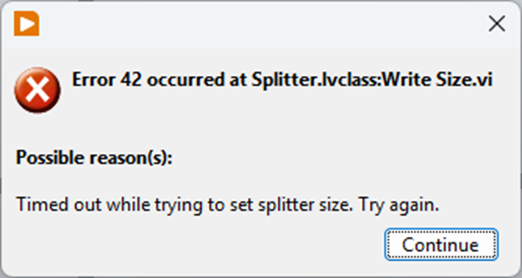
Just to share how I got around this: By deleting 1 front panel item at a time I found that one single control was causing PaneRelief to crash; an XY graph. Setting it temporarily to not scale and replacing it with a standard XY graph (the one I had had some colours set to transparent etc) was enough to avoid having PaneRelief crash LabVIEW, but it would now just present a timeout error: I found a way arund this too though: the VI in question was member of a DQMH lvlib that probably added a lot of complexity for PaneRelief. With a copy saved as a non-member it worked: I could replace the graph, edit the splitters with PaneRelief without the timeout error (even setting the size to 0), then copy back the original graph replacing the temporary one, and finally move the copy back into the lvlib and swap it with the original. Voila! What a Relief... 😉 I probably have to repeat this whole ordeal if I ever need to readjust the splitters in that VI with PaneRelief though 😮
2 points
-
I confirm that this license is nearly identical to the standard EULA we use for our commercial products. Some wording is not applicable to a distributed palette of VIs like this. Our intention was to share a few reusable tools, used internally, with the community. Ideally, we should have released them under a standard open-source license such as MIT or a similar option. These VIs have been released “as-is,” without support or any guarantee that they will function for your specific use case. You may need to troubleshoot or fix any issues on your own. Feel free to use them in any context. I’ll look into whether it's possible to update the packages on the tool network to replace the current license with a more standard open-source one.2 points
-
I put a temporary ban on inserting external links in posts (except from a safe list). We'll see what affect it has.2 points
-
This is the modern 2020's equivalent of "works for me".2 points
-
Your reporting of spam is helpful. And just like you are doing one report per user is enough since I ban the user and all their posts are deleted. If spam gets too frequent I notify Michael and he tweaks dials behind the scene to try to help. This might be by looking at and temporarily banning new accounts from IP blocks, countries, or banning key words in posts. He also will upgrade the forum's platform tools occasionally and it gets better at detecting and rejecting spam.2 points
-
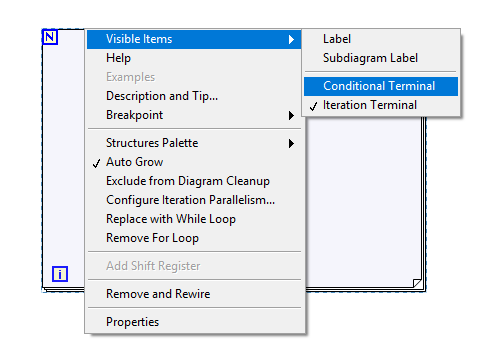
Apparently they moved it under Visible Items Edit: This also affects other types of structures.
2 points
-
Well, there are two aspects. The first is the technical one from hackers diving into the software and unhiding things that NI felt were not ready for prime time, to complicated for simple users, or possibly also to powerful. The main reason definitely always is however: if we release that, we have to spend a lot more effort to make it a finished feature (a feature for internal use where you can tell your users: "sorry that was not meant to be used in the way you just tried") is maybe 10 - 20% of development time than the finished feature for public use. There is also support required. That costs money in terms of substantial extra development, end user quality documentation (a simple notepad file doesn't cut it), maintenance and fixing things if something does not match the documented behaviour. And yes I'm aware they don't always fix bugs immediately (or ever) but the premise is, that releasing a feature causes a lot of additional costs and obligations, if you want to or not. The other aspect is, if someone who is an active partner and has active contacts with various people at NI, he is infinitely more likely to be able to influence decisions at NI than the greatest hacker doing his thing in his attic and never talking with anyone from NI. In that sense it is very likely that Jim having talked with a few people at NI has done a lot more to make NI release this feature eventually, than 20 hackers throwing every single "secret" about this feature on the street. In that sense the term "forcing NI's hands" is maybe a bit inaccurate. He didn't force them, but led them to see the light! Not out of pure selfless love, but to be able to officially use that feature for himself. The according Right-Click framework was a proof of concept to see how this feature can be used and mainly an example to other users how it can be used, and indeed once it worked it had fulfilled its purpose. That it was not maintained afterwards is not specifically JKI's fault. It is open source, so anyone could have picked up the baton, if they felt it was so valuable for them. The problem with many libraries is actually, if they are not open source and free, many complain about that, if it is open source and/or free, they still expect full support for it! In that sense I have seen a nice little remark recently:
2 points
-
Well, you are missing some important details in "The story of how this came about". So maybe indeed "it is worth a post of its own". It was LabVIEW 7.0 where they forgot to put a password on one of the VIs shipped with LabVIEW. And that VI had some node(s) on its block diagram including, I think, the BD reference property for the VI class. The community indeed got excited. But what did NI do? They tried to hide everything again in LabVIEW 7.1! I made a joke then that "our mother" NI must had had a PMS so she put the most interesting toys on a top shelf. So I made a"ladder" for us, kids, to get to them again and called it hviewlabs was me then, because that was a name of my company I used to sell my LabHSM Toolkit, an actor framework with actors controlled by hierarchical state machines (statecharts), long before the Statechart toolkit by NI, "THE Actor Framework", DQMH, and even before LVOOP. After PJM_Labview has published his private class generator http://forums.lavag.org/index.php?showtopic=307&hl=# and class hierarchies http://forums.lavag.org/index.php?showtopic=2161# and http://forums.lavag.org/index.php?showtopic=314&hl=hierarchy# (neither topic is available anymore) it became clear how to get access to private classes, properties and methods. However, it wasn't convenient enough. My PMS Assistant made it really easy. It gave back the access to those features to a much wider community of LabVIEW enthusiasts As you can see from the PMS topic discussion, by that time brian175 already had made his DataAct Class Browser. And he got really excited about the possibility not only browse but also to actually create objects, property and method nodes with the properties and method NI didn't want the users to see. By April of the same 2006 he figured out object creation too and incorporated the capabilities of PMS Assistant into DataAct Class Browser. At that point, I guess, NI decided that "the cat is out of the bag" and there is no point to resist. Nevertheless even after VI Scripting was made released by NI some classes, and even some properties and methods of public classes remain hidden even in LabVIEW 2024. I wonder why DataAct Class Browser is no longer available (as of January 2025) as well as original findings by PJM_Labview even here, on LavaG. Did NI "politely asked" admins to remove all that and just forgot about my PMS Assistant?2 points
-
Unfortunately, many of those are bots. I've disable user:pages long time ago, because of the spam. If there's anyone that deserves a lot of credit lately it's @LogMAN. He's doing amazing work cleaning up the pages and adding/editing content. There's a push recently from NI to support the Wiki and promote its use to the broader community and within NI internally as well. So, we should see more traffic and more activity than usual, which is great. This is one of the reasons for the recent stability updates. I encourage everyone here on LAVA to find whatever LabVIEW topic they are passionate about and start adding some pages or even fleshing out some existing content that needs improvement. One way to start would be to find some information that you always wish NI had easily available on their website but could never get easy access to. Then create that on the Wiki.2 points
-
I have had this in my toolbox for a long time to do what you are asking. It is part of a QuickDrop plugin I made to "fix up" a VI, similar to Darren's Nattify plugin. Size Diagram Window.vi2 points
-
I don't do Discord. I don't even do Ni.com. Feedback isn't really necessary. I only knocked it up because I went down a rabbit hole and wasn't impressed with the existing LabVIEW solutions. I thought I'd throw it in here to see if someone could improve it. My solution is optimised but there may have been a better alternative solution or maybe someone had a nice JPEG one (LSB doesn't survive JPEG compression). You might get a mention in the readme just for responding1 point
-
I would suggest rabbitmq, i want(ed) to present it at a LabVIEW user group (LUGE) but haven't done it yet. It's very powerful. I use redis and did a quick presentation (in french) at LUGE recently, i haven't used the stream feature though, I only used it as cache.1 point
-
Redis is certainly high performance and suited to multiple, loose writers, readers and subscribers, with bindings for so many ecosystems. One of its several features, which I haven't perused, are Streams. I'd be curious too to know whether continuous cross-app data streaming could be efficiently implemented using them.1 point
-
I've just spent an hour arguing with an LLM (Deepcoder). TL;DR A.I. is useless at programming. I had a bug. I'd spent about an hour trying to figure it out and not succeeding but it shouldn't be that hard-I'm just missing something obvious. So. Ideal scenario for a clever AI to show dominance and help out a poor old flesh-bag programmer, right? Just point out the mistake or mistakes and laugh at my stupidity like a real coder. The bug was that the address from recvfrom would be 0.0.0.0 instead of 127.0.0.1. The problem was either bind wasn't binding to a specific address (which it was supposed to) or the address translation was not working quite right. I gave it 3 functions where I thought the bug was and explained that IPv6 seemed to be reporting correctly but IPv4 was in error: one function (Listen) had the bind function one function had IPv6 and IPv4 address translation from a SOCKADDR_STORAGE structure to strings and the other function was the read function with the recvfrom. This is an abbreviation of the conversion: - Round one. The following code has a bug that returns 0.0.0.0 as the IPv4 address from "recvfrom" when it should be returning "127.0.0.1". Find the reason that the code is returning 0.0.0.0 instead of 127.0.0.1 and rewrite the code to fix the issue. It told me how to bind to a specific address and how to use the recvfrom function. It then basically wrote the example on the MS page for recvfrom but within the Listen function. - Round 2. I'm not using the "sockaddr_in" structures; I'm using SOCKADDR_STORAGE structures. Please modify your example to use SOCKADDR_STORAGE structures. It apologised made an excuse about misunderstanding and then proceeded to create an example, still using sockaddr_in structures, but this time hardcoding "127.0.0.1" in the bind address. - Round 3. No, no, no. It needs to support user entered IPv6 and IPv4 but there is a bug with the IPv4 address. It also needs to use SOCKADDR_STORAGE as in the code I supplied to you. Reevaluate the code and write a version of the code that fixes the bug. It apologised, said that it understands why it got it wrong, and then proceeded to create an example, still using sockaddr_in structures, but now hardcoding "::1" in the bind address. -Round 4. Look. It needs to support both IPv6 and IPv4 and that's the reason I'm using SOCKADDR_STORAGE. If you don't have enough information then ask for clarification but you have the code that the bug is in so find the damned bug FFS! Another apology, said it can understand my frustration and then proceeded to spit out the example from MS again. This went on for an hour. No code I could actually use in my functions, never pointed out the bug in my code and the prompts just got longer and longer as I tried to head-off it's stupidity. This was one of the functions. int Addr2Address(SOCKADDR_STORAGE addr, PCHAR Address, int *Port, int *IPvType) { int err = 0; *IPvType = 0; switch (addr.ss_family) { case AF_INET6: { if (Address == NULL) {return 46;} *IPvType = 2; char strAddress[46]; inet_ntop(addr.ss_family, (void*)&((sockaddr_in6 *)&addr)->sin6_addr, Address, sizeof(strAddress)); break; } case AF_INET: { if (Address == NULL) {return 16;} *IPvType = 1; char strAddress[16]; inet_ntop(addr.ss_family, (void*)&((sockaddr_in6 *)&addr)->sin6_addr, Address, sizeof(strAddress)); break; } default: {err = WSAEPROTONOSUPPORT; break;} } *Port = ntohs(((sockaddr_in6 *)&addr)->sin6_port); return err; } The bug is in the AF_INET case. inet_ntop(addr.ss_family, (void*)&((sockaddr_in6 *)&addr)->sin6_addr, Address, sizeof(strAddress)); It should not be an IPv6 address conversion, it should be an IPv4 conversion. That code results in a null for the address to inetop which is converted to 0.0.0.0. I found it after a good nights sleep and a fresh start.1 point
-
Drat, and now my typos and errors are put in stone for eternity (well at least until LavaG is eventually shutdown when the last person on earth turns off the light) 😁1 point
-
If the child classes are statically linked in the code (via class constants, or whatever other mechanism you use), then this approach should always work, because the child classes will always be in memory.1 point
-
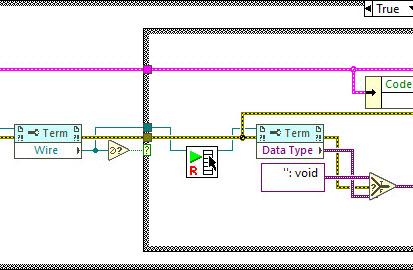
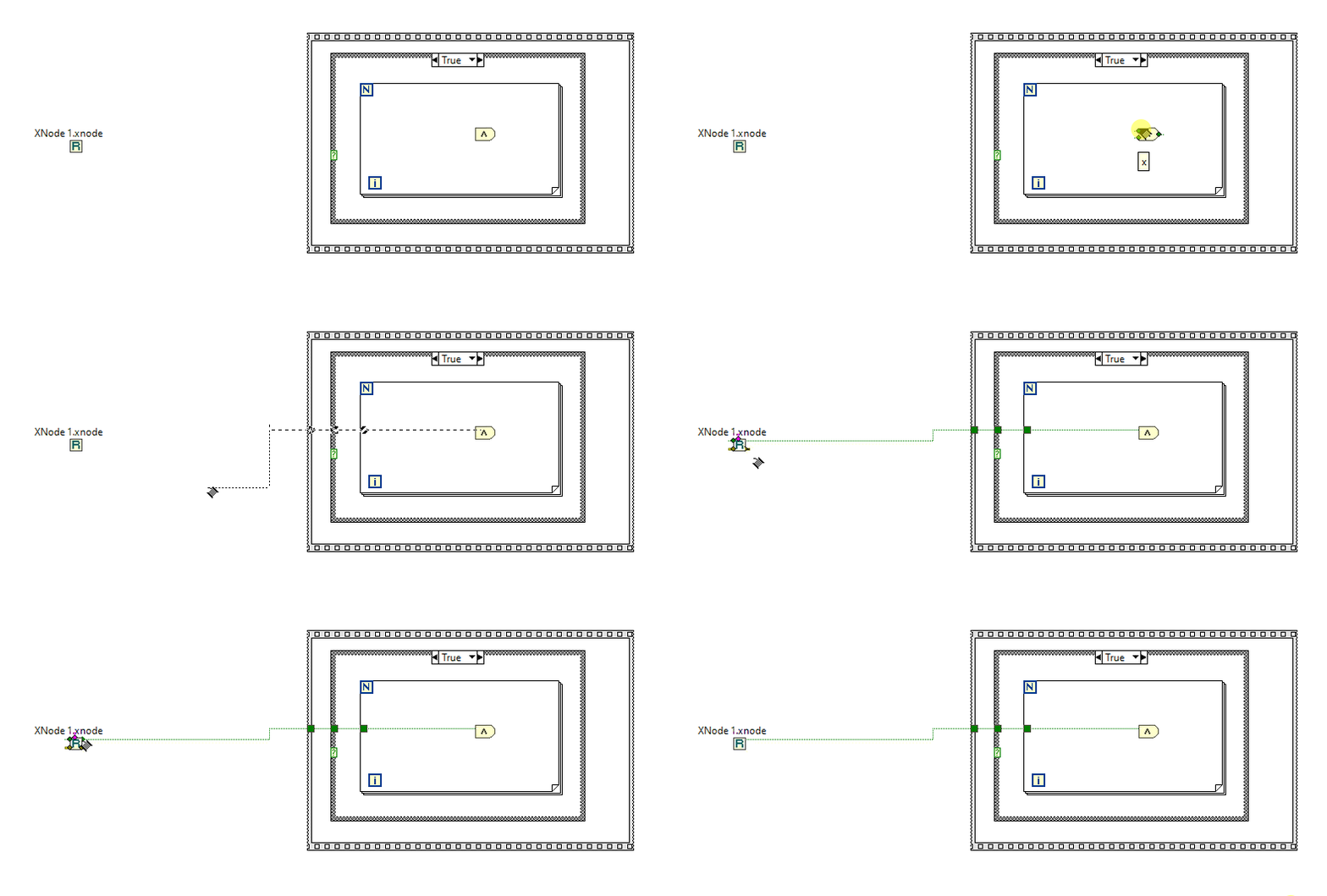
I kind of liked this idea and wished VIM's could allow for such a backpropagation. Even had a thought of making an idea on the dark forums. But then I played a while with the Variant To Data node. It doesn't play well. It can't determine a sink, if a polymorphic VI is connected or even when a LV native (yellow) node is connected. Borders of structures are another issue, obviously. So, it'd require making two ideas at least: to implement VIM backpropagation and to enhance the Variant To Data node. (As a hack one could eliminate the Variant to Data in their code with coerceFromVariant=TRUE token, but then the diagram starts to look odd and no error handling is performed). If someone still wants the code, shown in the very first post, it's here: https://code.google.com/archive/p/party-licht-steuerung/source/default/source?page=3 (\trunk\PLS-Code\PLS Main.vi). And these are the papers to progress through the lessons: LabVIEW Intermediate I Successful Development Practices Course Manual. Nothing interesting there for an experienced LV'er though. XNodes demonstrated here work a way better, and could be a good alternative (if you're OK with unsupported features, of course). As I tried to adapt them for my own purposes, I decided to improve the sink search technique. It surprised me a bit, that there's still no complete code to walk through all the nested structures to determine a source/sink by its wire. Maybe I didn't search well but all I found was this popup plugin: Find Wire Source.llb. It stops on Case structures though. I have reversed its logic to search for a sink instead of a source and tried to apply recursion, when it encounters a Case structure. Well, it's still not ideal, but now it works in most my cases. There are some cases, when it cannot find a sink, e.g. wire branches with void terms: Too many scenarios to process them all. Nevertheless, this little VI might be useful for someone. You may use it as a popup plugin, of course, or may pull out that Execute Find Wire Destination (R).vi and use it in your XNodes. As an example: Find Wire Destination.llb Already tried such nodes in a work project. I must admit that not all the time back-propagation is suitable, so about 50/50. But when it's used, it works.
1 point
-
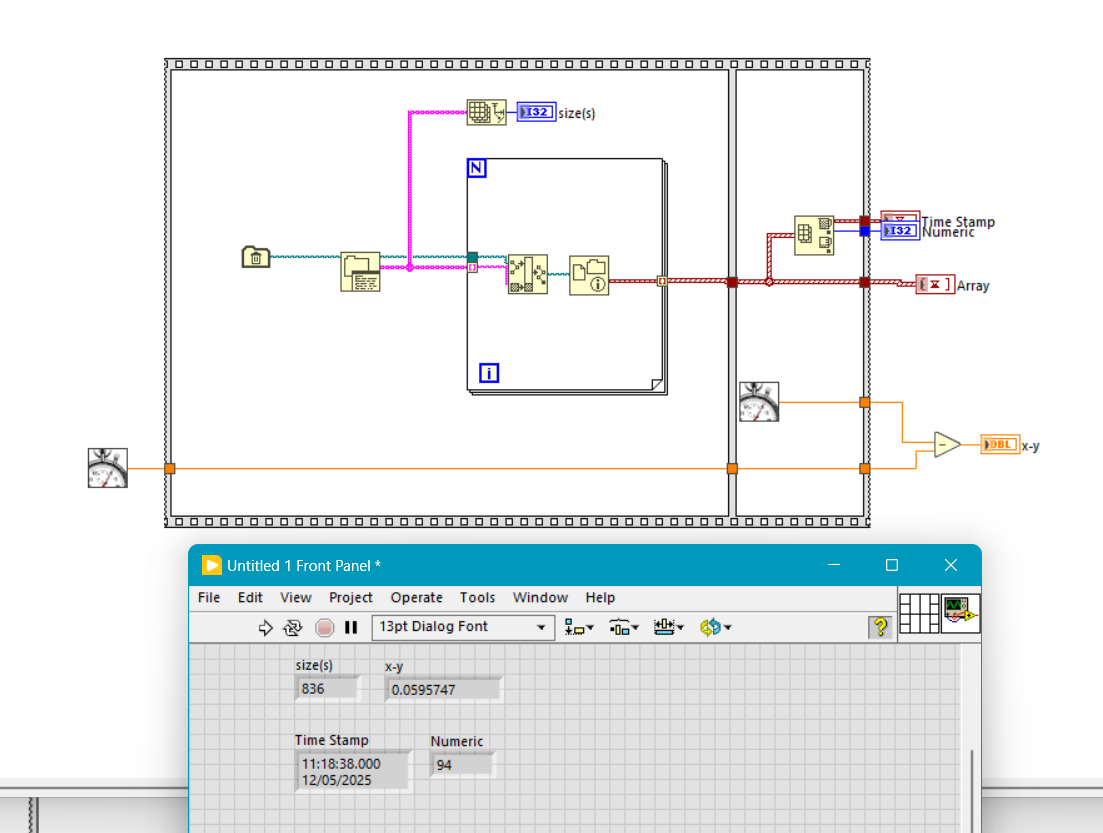
Done some simple testing. On a directory containing 838 files it took 60 ms.
1 point
-
 The popular serializer/deserializer problem. The serializer is never really the hard part (it can be laborious if you have to handle many data types but it's doable) but the deserializer gets almost always tricky. Every serious programmer gets into this problem at some point, and many spend countless hours to write the perfect serializer/deserializer library, only to abandon their own creation after a few attempts to shoehorn it into other applications. 🙂1 point
 -
I have experienced the same thing when my VI was the member of a large class. I removed the VI from the class, set the splitter positions, and then added it back to the class. :shrug:1 point
-
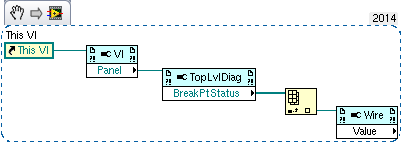
I can create it without problems in LabVIEW 2018 and 2020! So it is either that Scripting is not enabled in that LabVIEW installation or a bug in backsaving some of the scripting nodes to earlier LabVIEW versions. And I'm pretty sure that the Diagram property (called Block Diagram in the menu) is available since at least 2009 or thereabout. I can check this evening. My computer at work only has LabVIEW versions back to 2018 installed.1 point
-
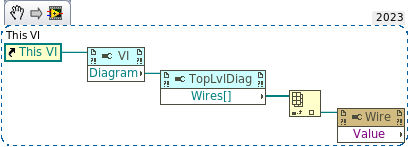
Since you asked, here are my findings: LV23 - can create the attached snippet (don't know if it works), and save it for LV14 (also attached). All the pulldown menues show relevant properties LV21 and LV 19 - open the saved for LV14, show a correct image, but the first property node lacks the "Block Diagram" entry in the pulldown; further properties have no menu ETA - and show the relevant pulldown menues when "Show VI scripting" is checked. LV14 - the first property node menu *has* a "Block Diagram" entry, but the further properties don't match LV23 W14.vi W23.vi
1 point
-
A bit sad to have to say this nowadays that most of the traffic on this forum is about leaked videos, money rituals and human sacrifices, but isn't this the part where someone starts to repost links to basic LabVIEW training resources on the NI site?1 point
-
Probably not the feedback you are expecting but we really should do something about the nasty root loop API calls in the input API. I have somewhat progressed with this over the years and have the windows stuff all working for mouse and keyboard (and a little of the Linux) but I don't have a Mac so can't do anything on that. If there is some interest then let me know and I will see if I can allocate time to getting an API together.1 point
-
i can't really answer your question but I suggest you watch this presentation :1 point
-
We are still looking for beta testers to join the ongoing testing phase of SOTA, our unified development environment for deep learning in LabVIEW. Now in its 36th version, SOTA is designed for developers interested in exploring deep learning using graphical programming. If you're passionate about innovation and eager to shape the future of graphical deep learning, we would love to hear from you! 🚀 𝐉𝐨𝐢𝐧 𝐭𝐡𝐞 𝐋𝐚𝐛𝐕𝐈𝐄𝐖 𝐒𝐎𝐓𝐀 𝐁𝐞𝐭𝐚 𝐓𝐞𝐬𝐭𝐞𝐫 𝐏𝐫𝐨𝐠𝐫𝐚𝐦 𝐚𝐧𝐝 𝐒𝐡𝐚𝐩𝐞 𝐭𝐡𝐞 𝐅𝐮𝐭𝐮𝐫𝐞 𝐨𝐟 𝐀𝐈 𝐃𝐞𝐯𝐞𝐥𝐨𝐩𝐦𝐞𝐧𝐭! Are you passionate about artificial intelligence? Do you want to be part of a groundbreaking journey to revolutionize AI workflows? SOTA, the unified AI development platform, is looking for beta testers to explore its latest capabilities and provide valuable feedback. 𝐖𝐡𝐲 𝐉𝐨𝐢𝐧 𝐭𝐡𝐞 𝐒𝐎𝐓𝐀 𝐁𝐞𝐭𝐚 𝐏𝐫𝐨𝐠𝐫𝐚𝐦? Be the First to Explore: Get early access to the 64th version of SOTA, featuring powerful tools like the Deep Learning Toolkit and Computer Vision Toolkit. Collaborate and Innovate: Share your insights and ideas to help us refine and improve the platform. Experience Unmatched Simplicity: Discover how SOTA’s graphical programming language, ONNX interoperability, and optimized runtime simplify complex AI workflows. ⭐ 𝐖𝐡𝐚𝐭’𝐬 𝐢𝐧 𝐢𝐭 𝐟𝐨𝐫 𝐘𝐨𝐮? 𝐄𝐱𝐜𝐥𝐮𝐬𝐢𝐯𝐞 𝐀𝐜𝐜𝐞𝐬𝐬: Be part of an exclusive group shaping the next generation of AI tools. 𝐄𝐚𝐫𝐥𝐲 𝐈𝐧𝐧𝐨𝐯𝐚𝐭𝐢𝐨𝐧𝐬: Test cutting-edge features before they’re released to the public. 𝐃𝐢𝐫𝐞𝐜𝐭 𝐈𝐦𝐩𝐚𝐜𝐭: See your feedback implemented as part of SOTA’s evolution. 💡𝐖𝐡𝐨 𝐂𝐚𝐧 𝐀𝐩𝐩𝐥𝐲? Whether you're an engineer, researcher, or AI enthusiast, your voice matters. If you're curious, innovative, and ready to explore, we want you on board! 👉Contact us if you want to join the open beta! https://lnkd.in/dWrckRJV or hello@graiphic.io or PM Stay informed and follow us on our youtube channel ! 👉 https://lnkd.in/dmP49rCa Stay informed on our website ! 👉 https://www.graiphic.io
1 point
-
Glad to hear you got it working! The reason it doesn't update is explained in the documentation: https://www.ni.com/docs/en-US/bundle/labview/page/loading-net-assemblies.html#d62572e601 point
-
You are probably getting a permissions error on the Open (windows doesn't ordinarily allow writing "c:") which will yield a null refnum and an err 8 on the open. Your err 5000 becomes a noop as does the write. You're then clearing that error so when you come to close the null refnum it complains it's an invalid parameter - equivalent to the following. Is it expected behaviour? Yes. Should it report a different error code? Maybe.
1 point
-
The comfyUI nodes are described by JSON in files called "Workflows" so we could import them and use scripting to create nodes. That's if we want parity. But we could support nesting which ComfUI wouldn't understand. The WebUI's are just interfaces to create REST requests which we can easily do already. I'm just trying to find a proper API specification or something that enables me to know the JSON format for the various requests. Like most of these things, there are just thousands of Github "apps" all doing something different because they use different plugins. Modern programmers can do wonderful things but it's all built on tribal knowledge which you are expected to reverse engineer. The only proper API documentation I have found so far is for the Web Services which isn't what I want - I'm running it locally.1 point
-
@hooovahh Is still weeding out the spam. I think he's in the eastern US time zone so he's 3 hrs. ahead of me ☺️. Much thanks to him. But I'm also improving the filters. Unfortunately, I think there are some sleeper accounts that were created before the changes that are starting to post. But, yes, I think it's getting much better. BTW, I just discovered that if you ctrl+right click a posted image you can set its' size! neat.
1 point
-
Update To get it to work I had to downgrade to version 6.0.0.25 - OpenG File Library (from 6.0.2.28) 6.0.0.18 - OpenG Array Library (from 6.0.1.20) May be this helps someone else 🤷♂️ Thanks1 point
-
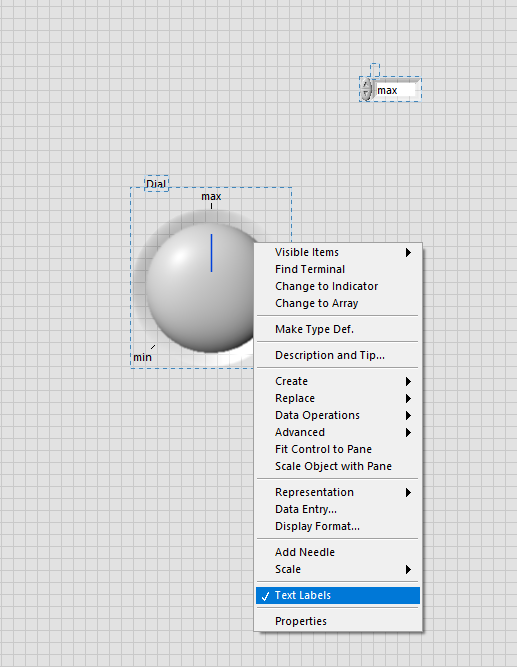
You can add text labels to a dial. It does not turn it into an enum but sort of works like you would expect (change the data type to U8).
1 point
-
I used scripting and low-level VI editing to generate a VI with every single decoration object in LabVIEW, at least those with ID's 0 to -4096. There may be some out of that range (and many in that range don't have a valid image associated with them) but this range contains a lot of them. 0 to -4096.vi1 point
.thumb.jpg.5d2ee2fea691c9fe3fab4270ba8e531d.jpg)