
ManuBzh
-
Posts
18 -
Joined
-
Last visited
-
Days Won
1
Recent Profile Visitors
2,915 profile views

ManuBzh's Achievements






-
Hi there ! If this subject interest you, I'm currently working on a new State Machine Toolkit for LabVIEW. You can find some shorts videos about it here : https://www.youtube.com/@EmmanuelGeveaux Or some posts about it here : https://www.linkedin.com/posts/emmanuel-geveaux-93836130a_labview-statemachines-ugcPost-746286803261... This toolkit will be Open-Source, free for students, education purpose and within LabVIEW Community Edition use. I'd be happy to ear any feedback on those videos and posts. Best regards Emmanuel

-
- 2
-

-
Unfortunately, I don’t have that privileged access, no… 😄 A very simple example: it would allow for consistent display between a table and its corresponding intensity chart, right? But also for any display that needs to be right-to-left, such as numbers,etc.
-
And what your point of vue about Q Controls ?
-
I didn't know this site Shaun, thank you. All of three of us in this topic, started LabVIEW a loooonnnggg time ago it seems...
-
M. Darren Tiger do ban them publicly ! 😄
-
For sure, this must have been debated here over and over... but : what are the reasons why X-Controls are banned ? It is because : - it's bugged, - people do not understand their purpose, or philosophy, and how to code them incorrectly, leading to problems.
-
I'd would find useful (may be it's already exists) to choose the editing growing direction of an array. It's used to be from left to right and/or up to down, but others directions could be usefull. Yes I can do it programmatically, but it's cumbersome and it useless calculus since it could directly done by the graphical engine. Possible (and I forget about it) or already asked on the wishlist ? (I'm quite sure there's of one the two !) Emmanuel
-
Unfortunately not, as it's description mention it only goes from Volume 1 to 4... Issues included are: Volume 1, Issue 1 (Spring 1993) Volume 1, Issue 2 (Summer 1993) Volume 1, Issue 3 (Fall 1993) Volume 2, Issue 1 (Winter 1994) Volume 2, Issue 2 (Spring 1994) Volume 2, Issue 3 (Summer 1994) Volume 2, Issue 4 (Fall 1994) Volume 3, Issue 1 (Winter 1995) Volume 3, Issue 2 (Spring 1995) Volume 3, Issue 3 (Summer 1995) Volume 3, Issue 4 (Fall 1995) Volume 4, Issue 1 (Winter 1996) Volume 4, Issue 2 (Spring 1996) Volume 4, Issue 3 (Third Quarter 1996) Volume 4, Issue 4 (Fourth Quarter 1996)
-
Yes, I know this website and this particular archive, but it's incomplete, and doesn't contains the issue I want... (resources CDs do not contain the articles but only VIs)
-
Hi There, If there's any place to ask this kind of question, I suppose this is it... May be some of you still have their old issues of the LabVIEW Technical Resource ... I'm looking for Volume 6, Number 2. I think this issue can also be found on a CD : Library of back issues. Thanks Emmanuel
-
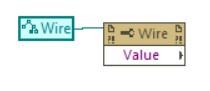
 Yes, Diagram property exists, and as a reference, since at least 8.5, I've checked. Edit : and ... I put here a simple VI containing the following code. It's saved in LV2015 version, if someone can tell me with which version it won't be broken... Thanks ! value of wire classe reference.vi
-
Thank you ensegre ! Very strange that diagram property does not appear in LV2019/2021 ! it's the basis for scripting...
-
And so the question is : is there different subVI refnum[] for each clone... I guess yes but note sure and can't figure how to reach them.
-
Yes, I agree with this (That's what I saw after in the heap). There's only one diagram for all, but you can set breakpoints or probe on each instance "diagram",(it's only images ?) However, it would be enough for me to be able to do the same : programmaticvally put BP or read wires values on them. I don't really know where to go now clone DS... if ever I can do something (But I think yes).
-
It's the Top Level Diagram reference... no the clone diagram reference (if ever this has sense) (If you look at the exact name on the property node linked to your diagram ref, you'll see : TopLvDiag )