All Activity
- Today
-
 Good afternoon! I have multiple positions open starting up ASAP for LabView System Integration & Test Engineers. Our client is located north of Boston, and these are long term contract positions that are all onsite. Our client is looking for LabView and Test Stand experience. You would need to be a US Citizen, and you would also be able to obtain an active secret clearance on this project. If you are interested in learning more, please email me over a copy of your resume to: *****@*****.tld Thank you! Lou LaMattina Senior Technical Recruiter Advanced Technology Office: 774-210-4084 *****@*****.tld www.advancedtechno.com
 -
Lou LaMattina joined the community
-
I think I found the solution
-
 wang111 joined the community
 -
Hey, I have a LabVIEW programme that reads a .txt file. This file has two columns: timestep and current. The current data is supposed to be sent to a power supply. So far, everything is loading too quickly. I want the current (t1) to be sent, then the current (t2) after 1 second, and so on. Essentially, I want each current value from the text file to be present for one second. How do I do this? I have charge and discharge in a case structure so the current goes in a for loop to check if positive or negative and then inside the for loop I have 2 cases for charge and discharge. I tried the wait block but it didn't really work (or I placed it wrong). I am quite new to LabView so I would appreciate any help. Kind regards
-
 msceng joined the community
 -
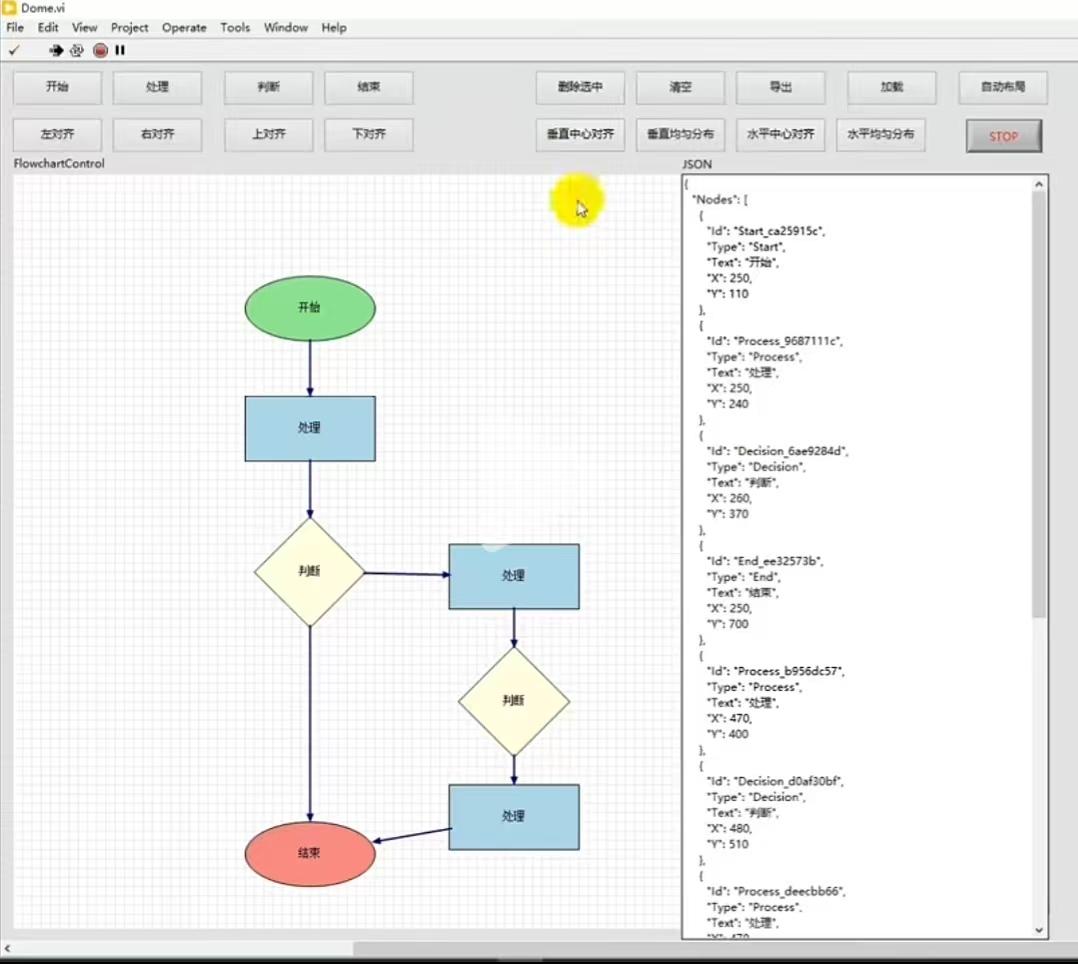
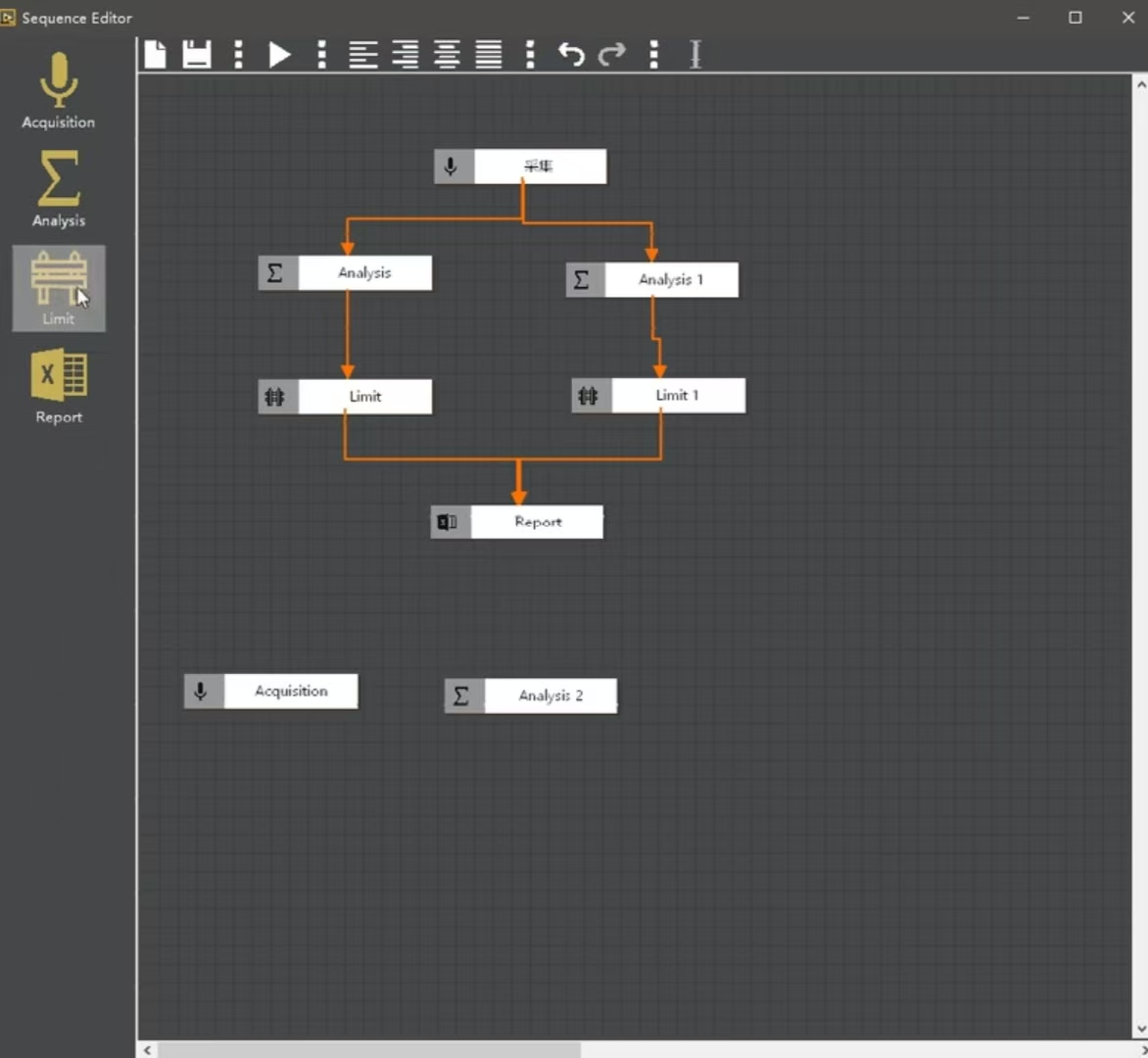
 I am having trouble developing a Sequential Function Chart (SFC) in LabVIEW. I found some videos online showing successful implementations (screenshots attached), but without the source code. I don't know how they are achieved(it is possible they utilized the 2D Picture control). Has anyone worked on similar projects and can offer some help? Similar to Siemens PCS7 SFC, I need to arrange specific modules in a certain order—either sequentially from top to bottom or in parallel. I have already figured out the execution logic. My main challenge is how to implement the graphical editing functionality.
-
 4396 joined the community
 - Last week
-
 zichen joined the community
 -
 GRY joined the community
 -
 MasterMogen joined the community
 -
 yiyilava joined the community
 -
 Manuel9 joined the community
 -
 lily chu joined the community
 - Earlier
-
 MaheshK changed their profile photo
 -
After submitting that question, it took me to the registration page again, which appeared to be the same url, but this time it let me register. Not sure what was going on.
-
I am trying to sign up and can't do so, keep getting: You did not pass the security check. Please try again. I've tried on firefox and edge on my computer and firefox on my phone (android). Very strong password also.
-
It's reasonably easy to use SQLCipher. Just pass in the dll and execute two SQL PRAGMAS, one with your license for SQLCipher and one with the database's key (https://www.zetetic.net/sqlcipher/sqlcipher-api/). No new calls are needed.
-
It's been a long, long time but I did spend a week trying to get one to work so I'm emotionally scarred. Part 1 — P2P viability: With no stubs and both devices transformer-coupled internally, is the coupler genuinely redundant? Or are there signal integrity concerns I should be thinking about? The internal transformers are for isolation rather than impedance matching. They are required so you can have floating differential signals. If you are only transmitting over a couple of metres then you can get away with no external isolation. But you should really be using a dual-stub transformer bus coupler inline (or at one end) with terminators. Everyone starts point to point then adds devices! Part 2 — Cable spec: We're specifying a custom cable for this (DB9 female one side, HD-DSUB15 male the other — matching the AIM card's connector). What are the things that matter most in the spec — impedance tolerance, shielding, untwisted length inside the backshell, connector grounding? What's easy to get wrong? Suggestions (in order of importance) #1 You must terminate both ends. Each end should have a 78 ohm resistor across it. Impedance mismatch is the No.1 Killer. You don't seem to have mentioned termination resistors. #2 Check differential pair polarity (A and B lines) and that the correct terminals on the connector are soldered. It's been a while but I vaguely recall that the cable is a crossover cable if you are not using couplers so D1A connects to D2B etc. (I may be wrong on that) #3 Check your cable impedance. It should be 70–85 ohm at 1 MHz. #4 Make sure grounding is good (360 deg). You will get away with crappy grounding in the lab if the distance is very short, though. Aim for a max of 1-1.5 cm unshielded inside the connector shell. Use metal shells grounded to the chassis, if you can. #5 Put a scope on the lines looking at the waveform if you don't have an analyser. You are looking for rise/fall times of 100–300 ns, overshoot/ringing limits, etc (I don't remember them all-look at the spec).
-
Can you describe the issue and steps you took?
-
Hi, Two-part question for anyone with 1553 hardware experience. Setup: AIM ASE1553M-2 PCIe card ↔ LEON/GR740 eval board, both transformer-coupled, single ~2m cable, no bus coupler, lab bench only. Gaisler (the GR740 board manufacturer) confirmed their board has been used in a successful P2P 1553 connection — but didn't share what was on the other end or what cable specification was used. Encouraging, but leaves us without enough detail to just replicate it. Part 1 — P2P viability: With no stubs and both devices transformer-coupled internally, is the coupler genuinely redundant? Or are there signal integrity concerns I should be thinking about? Part 2 — Cable spec: We're specifying a custom cable for this (DB9 female one side, HD-DSUB15 male the other — matching the AIM card's connector). What are the things that matter most in the spec — impedance tolerance, shielding, untwisted length inside the backshell, connector grounding? What's easy to get wrong? We have a draft spec and a drawing from a potential manufacturer. Happy to share via PM with anyone who can give meaningful feedback — can't post publicly due to IP restrictions on the drawing. Thanks.
-
I used to sell a product called the SQLite API For LabVIEW. It supported encryption. It's no longer available as SQLite removed the hooks and forced most people to use the SEE. SEE is a different source tree that they give you access to after you have paid for it. SQLCipher uses a modified source code tree and rewrites the SQLite source - they basically put the hooks back in again. Whichever way you choose, you will have to compile the binaries yourself and support them. You won't be able to just download the binaries from the SQLite website. It's been a while, and I haven't looked at the source recently, but I vaguely remember there were only a small number of API calls (maybe 2 or 3) that you needed to use
-
I found a nice solution Encrypted SQLite - A Gift - NI Community would love to hear your experience if you have used something like this.
-
Has anyone used Encryption with the SQLite Library in LabVIEW? If so, I’d love to hear: Which one you used (SEE or SQLCipher or other approch) Whether replacing the SQLite DLL was enough, or if the VIs needed changes Any gotchas around keys, deployment, or performance Also, what’s the recommended approach if I want to use SEE/SQLCipher/Other with this library? More specifically, if I want to use encryption together with this SQLite Library, what would be the recommended approach? Is it sufficient to replace the SQLite DLL with an encrypted build? Are additional API calls (e.g. sqlite3_key) needed in LabVIEW? Any advice on best practices for production deployments? I understand that encryption is not part of standard SQLite, and I’m mainly looking for guidance from anyone who has already gone down this path. Thanks in advance for any insights or lessons learned.
-
2026 it's still messed up.
-
In LV 2025 the ability to open reentrant clones on the cRIO is supported in the LV IDE. I have confirmed that I can open the front panel and probe the BD of reentrant clones running on my cRIO with Linux RT. There is a bug however that inhibits this ability until the execution properties window of the reentrant vi is opened and the code restarted.
-
.thumb.jpg.5d2ee2fea691c9fe3fab4270ba8e531d.jpg) Experiencing strange behavior on a cRIO where I have a heater controller that uses 3 PID vi's. The execution properties of the PID vi's are set to Preallocated clone Reentrant. When running from the project the individual PID vi's do not initially open as clones. Only after opening the properties and then restarting do things start working properly. This is a repeatable issue that reoccurs each time the code is deployed to the cRIO from the project. I suppose I could just save the PID vi multiple times with different name but that is a poor solution and cumbersome since the PID vi is in the NI_PID_autopid.lvlib.
Experiencing strange behavior on a cRIO where I have a heater controller that uses 3 PID vi's. The execution properties of the PID vi's are set to Preallocated clone Reentrant. When running from the project the individual PID vi's do not initially open as clones. Only after opening the properties and then restarting do things start working properly. This is a repeatable issue that reoccurs each time the code is deployed to the cRIO from the project. I suppose I could just save the PID vi multiple times with different name but that is a poor solution and cumbersome since the PID vi is in the NI_PID_autopid.lvlib. -
Also I have Find IP address and Find token vi's in LabView 2023. For Find IP address you need to install: https://www.vipm.io/package/plasmapper_lib_pl_dns_client/?utm_source=vipm_desktop P1 meter find ip address.vi P1 meter API v2 get token.vi
-
Labview 2023 P1 meter labview 2023.vi
-
Can anyone please save it as LabVIEW 2023 🙂 Thanks
-
A follow up on this: the issue seemed to be with the PXIe-7820R module. We tried another one and it worked. Don't know why. Physical damage? Firmware mismatch? I have no idea but it is annoying since the module was brand new. But my specific problem is solved now.
-
It is not that LabVIEW MAY unregister the reference, but that it WILL unregister the reference as soon as the top level VI in whose hierarchy the reference was created goes idle. This is by design and the only way to prevent that is to either keep that hierarchy active until any other user of that refnum has finished or delegate creating of the refnum to the place where it is needed, for instance through a LV2 style global maintaining the reference in a shift register and when being called for the first time it will create the refnum if the shift register contains an invalid refnum. True Actor Framework design kind of mandates that all refnums are created in the context of where they are used not some other global instance that may or may not keep running for the time some Actor is using the refnum.
-
Thanks for the feedback. Will try to check what the problem with VIPM 2026 might be. As to commercial information I saw that you have sent an email to info (at) citengineering.nl and will make sure that the person in question will respond to that.
-
It seems this is related to the execution level of the constructor. Since the constructor was executed in the scope of the VI I use for testing, once that VI finishes and stops, LabVIEW may unregister the reference before the actor stops. LabVIEW reference about user event registration:
-
Edit: No, I't doesn't works